
Lamina Flow
Data-quality, continuity, regime and feature-admission capabilities for operational and machine-learning workflows that need to know when their inputs have changed.
Lamina // local-first machine learning
Lamina is WorkFoundry’s working local-first machine-learning layer for teams that want to run, inspect and improve focused models on hardware they control — with less unnecessary cloud reliance and clearer evidence for every update.

01 // local-first machine learning
Lamina supports focused machine-learning work that stays close to the systems and data it serves: desktops, workstations, laptops and compact edge hardware. That can avoid needless cloud inference cost and delay for workloads that do not need a large remote model.
Its core local workflows are proven, but it is not yet a finished hosted service or a promise of autonomous authority. Broader capabilities will be introduced only when their operational controls and evidence are ready.
02 // a glass box, not a black box
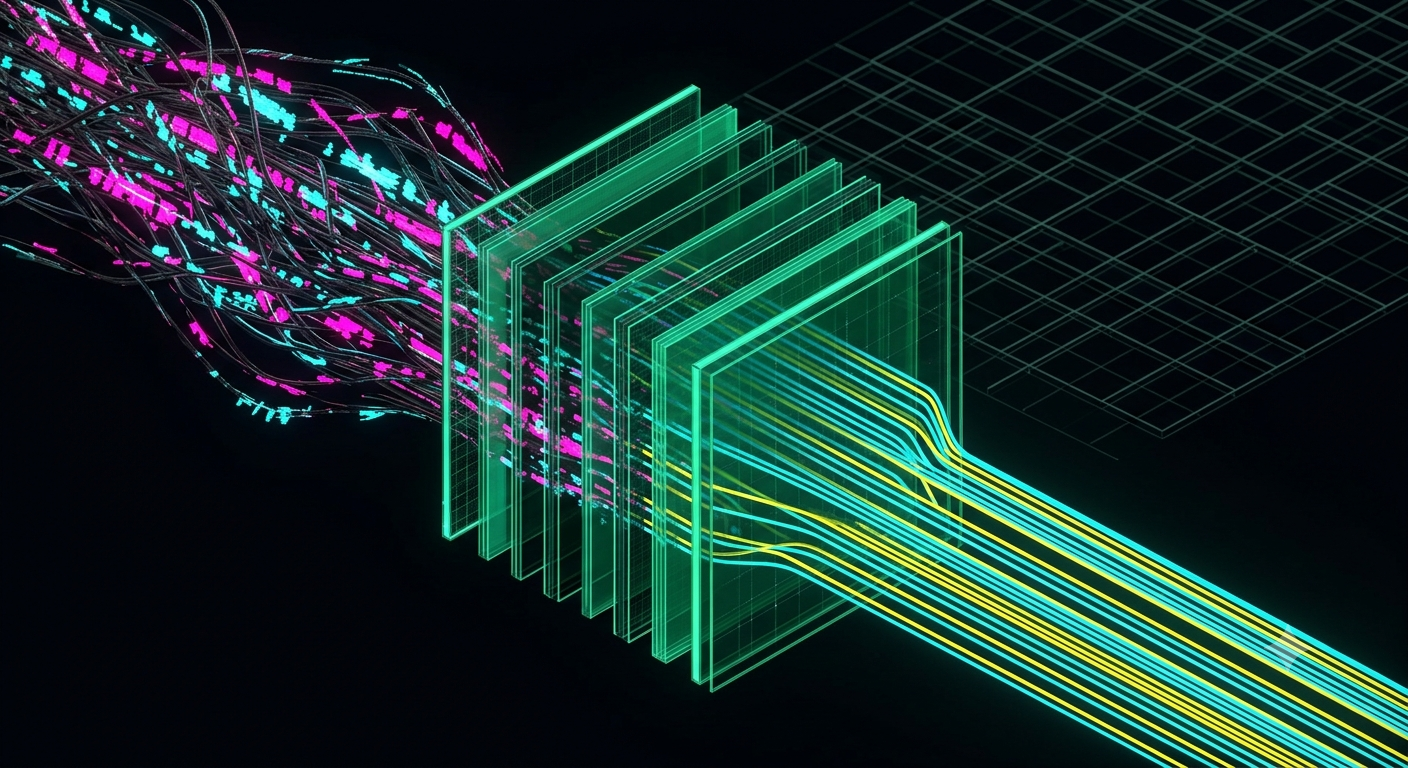
A black-box system can produce an answer while hiding the condition of its inputs, the basis for a model comparison and the evidence behind the next decision. Lamina is built as a glass box for operational data and machine-learning work: teams can see what arrived, what changed, what was admitted, how a model was compared and what supports the next action.
03 // keep proving it
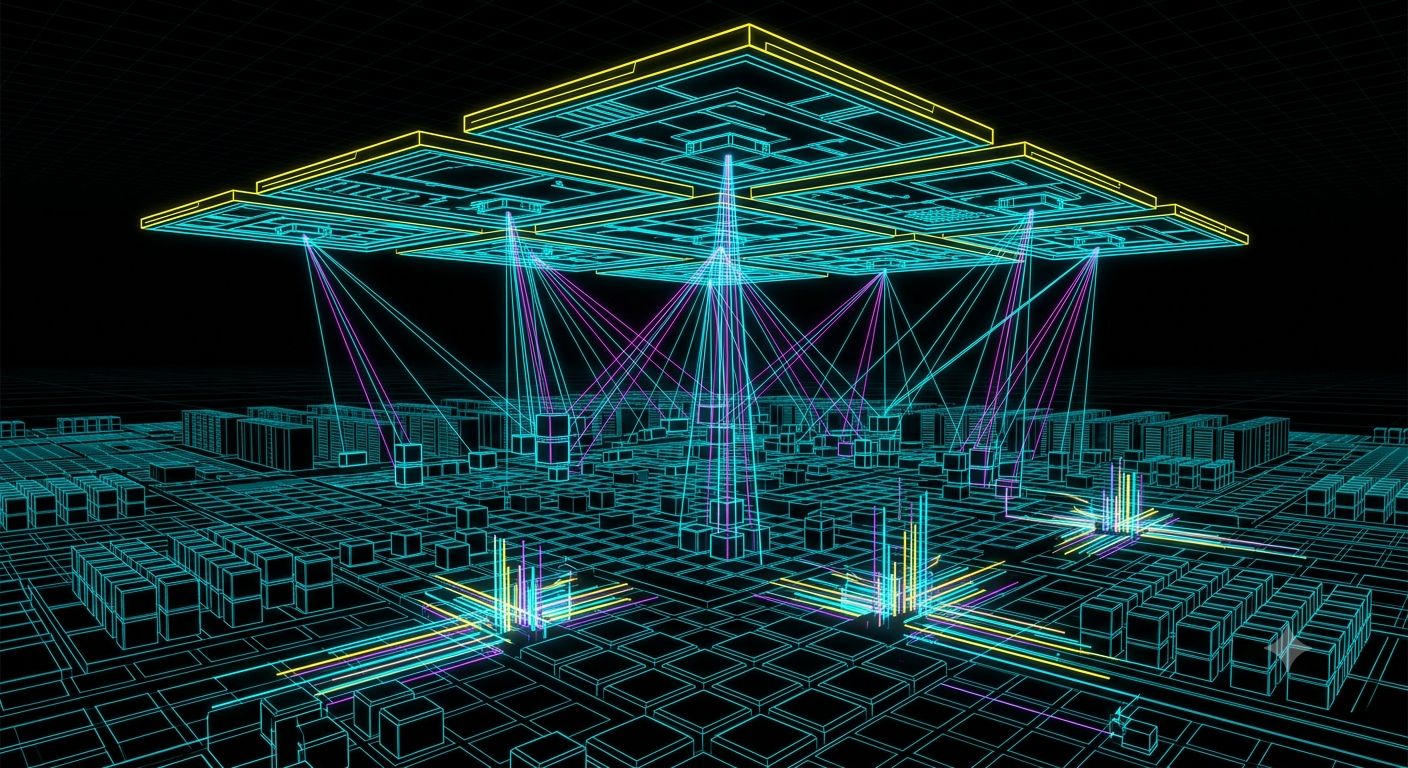
Do not judge a model on one historical snapshot. Lamina supports testing models as time moves forward: learn from an earlier period, check the next unseen period, then repeat. Teams get a clearer view of whether a model remains useful as conditions, inputs and operating environments change.
This makes model testing a practical operating habit rather than a one-time launch task.
04 // update with evidence
As new evidence arrives, Lamina supports bounded local training, comparison and evidence-led review of updated models. Controlled promotion remains a separately governed step. The intended workflow would let a team test a candidate against an existing model on the same unseen data, inspect the result and retain the evidence for why a newer model was — or was not — adopted.
The intended cycle is simple: observe, test, improve, compare and update with evidence. That avoids treating a one-time trained model as permanently reliable while reducing reliance on expensive remote computation where focused local ML is the better fit.
05 // product lines
Data-quality, continuity, regime and feature-admission capabilities for operational and machine-learning workflows that need to know when their inputs have changed.
A future set of bounded sensitivity, local training, experiment and machine-learning model-comparison workflows that retain the evidence behind an iteration.
A future authorised, read-only mixing-desk experience for reviewing the evidence behind data, model and workflow decisions.
06 // example environments
Illustrative examples of where Lamina could help teams check changing inputs before relying on them; these are future design directions, not current deployments or autonomous operation.
Compare motor temperature, vibration, pressure and cycle readings before a maintenance or quality alert is trusted. See whether the machine changed or the signal simply arrived late.
Check meter readings, flow rates and site demand for gaps, drift or sudden changes before an operational decision relies on them.
Bring together barcode scans, vehicle location and depot events so a team can tell when a delay is real and when a device has stopped reporting.
Keep test inputs, instrument readings and run conditions together when comparing settings or methods, so each result can be understood in context.
Check prices, volumes and reference rates for gaps, delays or mismatched sources before a governed portfolio or risk workflow relies on them.
07 // designed for governed systems
Lamina is intended to work with explicit components, declared interfaces and retained receipts. That keeps useful questions answerable across data and ML work: Which input changed? Which model comparison is fair? Which workflow had permission to act?
Lamina is being built in stages. We will introduce individual capabilities only when the supporting operational controls and evidence are in place.
STATUS // BUILDING IN THE OPEN
Ingress Shield is WorkFoundry’s controlled integration pilot. It is deliberately narrower than the Lamina direction: protected webhook connection checks and account-bound, read-only AI-agent compatibility checks.