Production equipment workflows
Connect machine readings, maintenance software and review steps while keeping clear which component supplied each result and which workflow was allowed to proceed.

Atom Flux // the operating substrate

Atom Flux is a working local-first operating substrate for reusable software components, governed workflow composition, explicit authority boundaries and reviewable evidence.
01 // operating substrate
Atom Flux is built and operating locally for systems that need more than code that simply runs. It keeps a component's identity, a workflow's declared shape, the permission to act, and the resulting record connected rather than scattering them across opaque integrations.
It is deliberately industry-agnostic: the substrate should not need to encode the business policy of the system built on it.
The local operating core is implemented. Federation and broader cross-platform operation remain the next expansion gates; they are not presented here as completed capabilities.

02 // the lifecycle
Atom Flux does not treat determinism as a single validation rule. It carries explicit identity, typed interfaces, declared authority and evidence through the lifecycle of a component and workflow. The same declared component, interfaces and policy boundary can be checked consistently, with a reviewable record of what was checked and what occurred.
This does not claim that every real-world outcome is predictable. Models, external data and physical systems still need testing; Atom Flux makes their operating conditions explicit, bounded and reviewable.
03 // example environments
Illustrative systems where Atom Flux could keep components, workflow permissions and outcome records connected; these are future design directions, not deployed systems or public execution authority.
Connect machine readings, maintenance software and review steps while keeping clear which component supplied each result and which workflow was allowed to proceed.
Coordinate meter, pressure and flow services across electricity or water sites, with a visible record of the information used and the decision path it entered.
Link warehouse management, barcode scanning, route planning and vehicle telemetry without losing track of which service produced an update or where it was passed next.
Place an AI assistant alongside maintenance, stock or support systems, checking requested interfaces and approval boundaries before a proposed action moves into the wider workflow.
Keep market-data inputs, risk calculations and governance approvals connected, so a team can see what informed a decision, who reviewed it and how it moved through the workflow.
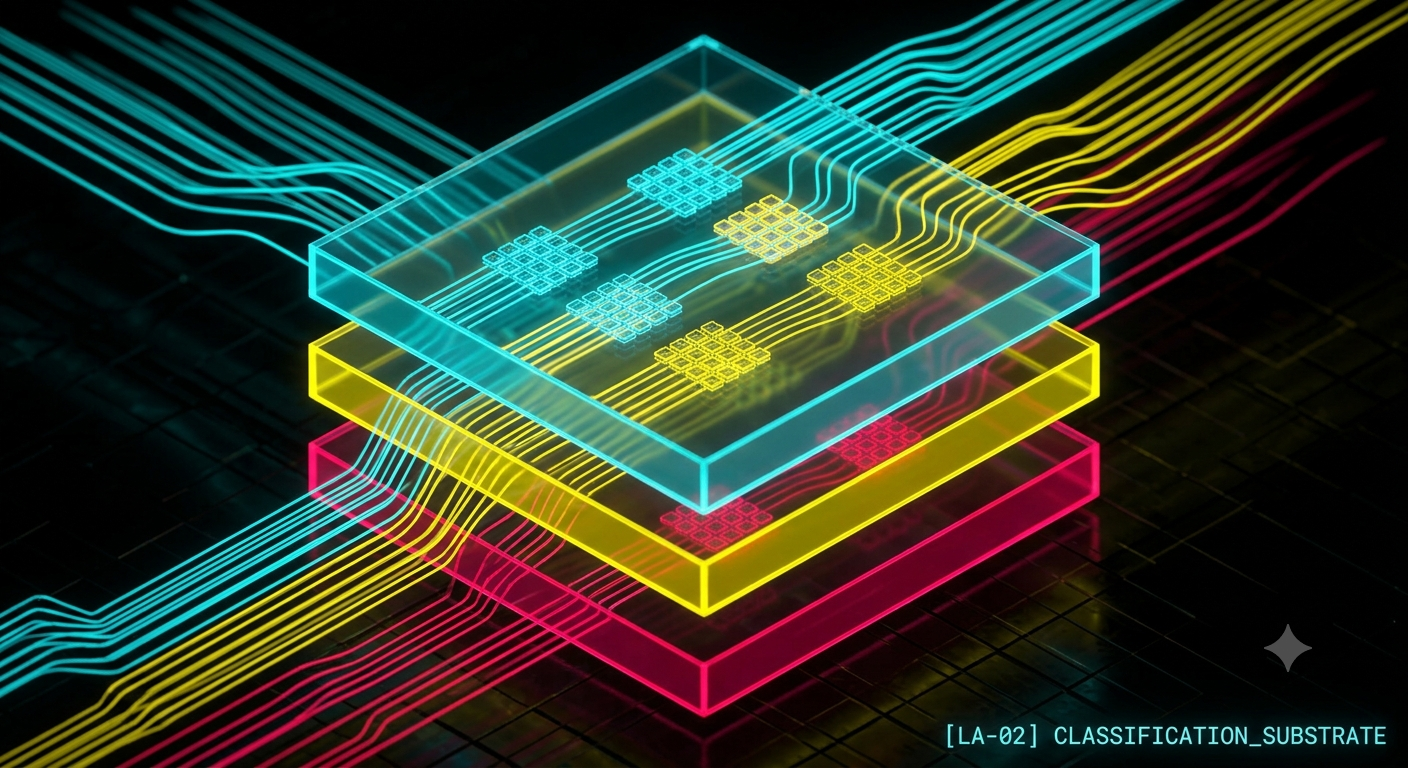
04 // a foundation, not a shortcut
Atom Flux does not turn every software workflow into an autonomous agent, and it does not grant an external visitor authority to execute work. It supplies the boundaries through which higher-level products can be composed and assessed.
Ingress Shield applies this same identity, interface, boundary and evidence model to a declared connection before it is taken forward for review. That is why it can ask more than whether a payload matches a schema. It remains a separate, deliberately narrower controlled pilot for integration assurance; it is not a public Atom Flux execution endpoint.
Lamina builds on this working substrate for locally proven, inspectable machine-learning workflows.